What Does Autumn Feel Like Inside a Campervan in Japan? - Part 1


Autumn in Japan often begins with a quiet morning: cool air outside, warm bedding inside, and the first hint of colour beyond the window. You make coffee, pull on a fleece and open the campervan door to a crisp landscape of forests, lakes or mountains.
That contrast is the pleasure of an autumn campervan trip. The days are comfortable for driving and walking, while the evenings are cool enough to make your van feel like a cosy base.
In this three-part Autumn Japan Campervan series, we look at the feeling of the season, how to follow the foliage and finally how to turn both ideas into a practical seven-day route. Continue with Blog 2: How to Chase Autumn Colours Across Japan by Campervan, then use Blog 3: A 7-Day Autumn Campervan Itinerary in Japan to plan the drive.
Is autumn a good season for Japan Campervan Road trip?
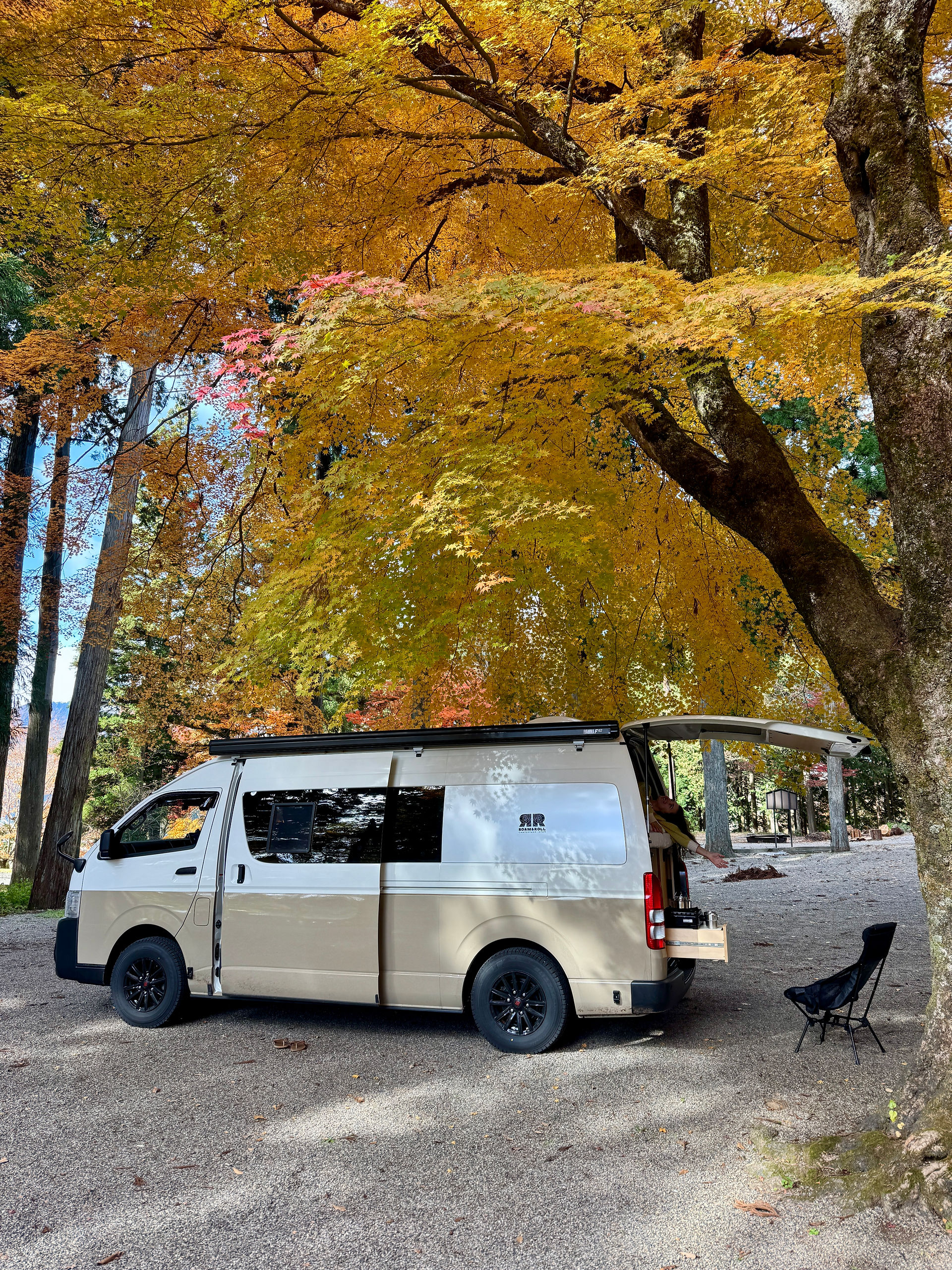


For many travellers, yes. By October, summer heat and humidity have usually eased, making long drives, walks and outdoor sightseeing more comfortable. Autumn also turns the journey itself into part of the holiday: forests, mountain roads, lakes and rural towns become scenery rather than spaces between destinations.
The season changes quickly with latitude and elevation. September can still feel like summer around Tokyo, October is often the easiest all-round month, and November brings clearer air, cooler mornings and more dramatic colour. Japan’s climate normals show Tokyo averaging about 18°C in October and 12.5°C in November, although mountain destinations can be much colder. Check the Japan Meteorological Agency climate normals before packing.
September: late summer becoming autumn

Lower areas may still be warm and humid, with periods of heavy rain or typhoon activity. Higher destinations such as Nikko, Yamanashi, Karuizawa and Nagano usually feel cooler first.
Pack T-shirts, lightweight trousers, a thin layer, a light rain jacket and comfortable walking shoes. September is a good month for lakes and mountain scenery, but leave room to change your route around the weather.
October: the comfortable middle ground

October is often the best month for a first autumn campervan trip. Days are generally pleasant for driving and walking; evenings are cool enough for a warm interior, hot spring and slow dinner.
Bring long sleeves, a fleece or light knitwear, a waterproof jacket and shoes with good grip. Higher elevations may already be well into the foliage season, while Tokyo and lower areas may still be mostly green.
November: crisp mornings and stronger colour

November feels unmistakably autumnal. Mornings are colder, the air often feels clearer and forests can be filled with red, orange and gold. In the mountains, however, early snow and seasonal road closures are possible.
Bring a warm jacket, fleece, long trousers, warm socks, a hat or scarf and waterproof outerwear. Ask your campervan provider about winter tyres and route restrictions before departure.
Where autumn feels different within 5–7 hours of Tokyo

Yamanashi and the Fuji Five Lakes: lake views, Mount Fuji, forest walks, cafés, vineyards and hot springs. Nights near the lakes can be considerably cooler than Tokyo.

Nikko and Kinugawa: cedar forests, waterfalls, shrines, mountain roads and onsen towns. Higher Okunikko usually changes earlier than the city.

Karuizawa and Nagano: cooler air, forest roads, cafés, mountain scenery and hot springs. Late October and November mornings can feel close to winter.
Autumn normally reaches colder and higher areas first, then moves towards lower elevations and cities. The exact dates change each year, so use a forecast as a guide rather than a promise. JNTO’s autumn guide is a useful starting point.
What autumn feels like inside the campervan


Outside, the morning may be misty and cold. Inside, proper bedding and the FF heater make breakfast feel unhurried. You might wear a fleece at sunrise, remove it during a sunny afternoon drive and put it back on after an evening walk.
The campervan also makes changing temperatures easier to manage. Ventilation and the fan help on warmer September nights, while warm bedding and heating matter more in the mountains later in the season. You can carry extra layers, food and walking gear without repacking every morning.
Why a campervan suits autumn foliage

The leaves do not change everywhere at once. A campervan lets you move with the season: higher or further north for early colour, lower or further south later on. You can also change plans around rain, visibility and road conditions, and wake closer to the forest or lake you came to see.
Hotels remain convenient in cities, but a campervan is especially useful for a countryside-focused trip. It gives you more time outdoors, fewer hotel changes and the freedom to turn a scenic drive into one of the day’s main experiences.
Start planning your autumn road trip

September offers a gentle transition from summer, October brings balanced weather and November creates the strongest autumn atmosphere. Choose the landscapes you want—lakes, mountains, onsen towns or rural roads—and leave enough flexibility to follow the leaves.
If you’re ready to begin your adventure, Roam and Roll Campervan Japan makes exploring the country effortless, comfortable, and unforgettable—no extra rentals required.
Next, read Blog 2: How to Chase Autumn Colours Across Japan by Campervan to learn how elevation, latitude and weather shape your route.


Comments