Customer Story: Tokyo to Tateyama Hiking & Camping Adventure | 5-Day Campervan Road Trip Japan


This was actually my second time renting from Roam and Roll Campervan Japan, and honestly, the experience was just as good as the first time.
The campervan was in excellent condition, very clean, and fully equipped with everything we needed. The bedding was comfortable, the blankets were warm, and all the camping essentials like cooking equipment, tables, and chairs were already included. Even when we spent nights in the mountains where temperatures dropped significantly, we stayed warm and slept comfortably throughout the night.
For this trip, we planned a 5-day, 4-night outdoor adventure focused on hiking, camping, and exploring the Tateyama area.
Drive, Hike, Camp — Experience Japan’s Nature Beyond the City
Escape the city and explore Japan’s alpine beauty on this 5-day, 4-night campervan journey from Tokyo to Tateyama and Nagano.
This route combines:
Scenic road trips
Alpine hiking in Tateyama
Overnight stay on the mountain
Peaceful camping in Nagano
Perfect for travelers looking for a slow, flexible, and nature-focused Japan experience.
Why Travel by Campervan?
Traveling by campervan gives you the freedom to:
Stop anytime for scenic views
Sleep close to nature
Avoid strict hotel schedules
Travel comfortably with family or friends
Day 1: Tokyo → Ogizawa (Gateway to the Tateyama Kurobe Alpine Route)


📍 Destination: Ogizawa Station, Nagano Prefecture
The drive took around five hours, but it never felt like a long journey. One of the things I enjoy most about campervan travel in Japan is the freedom to stop whenever something catches your attention. Whether it's a scenic viewpoint, a roadside station, or a local café, you're never stuck to a strict schedule.
As we left Tokyo behind, the scenery gradually changed from busy city streets to quiet countryside, rice fields, and eventually the mountains of Nagano. The further we drove, the more it felt like we were leaving everyday life behind and heading into a completely different side of Japan.


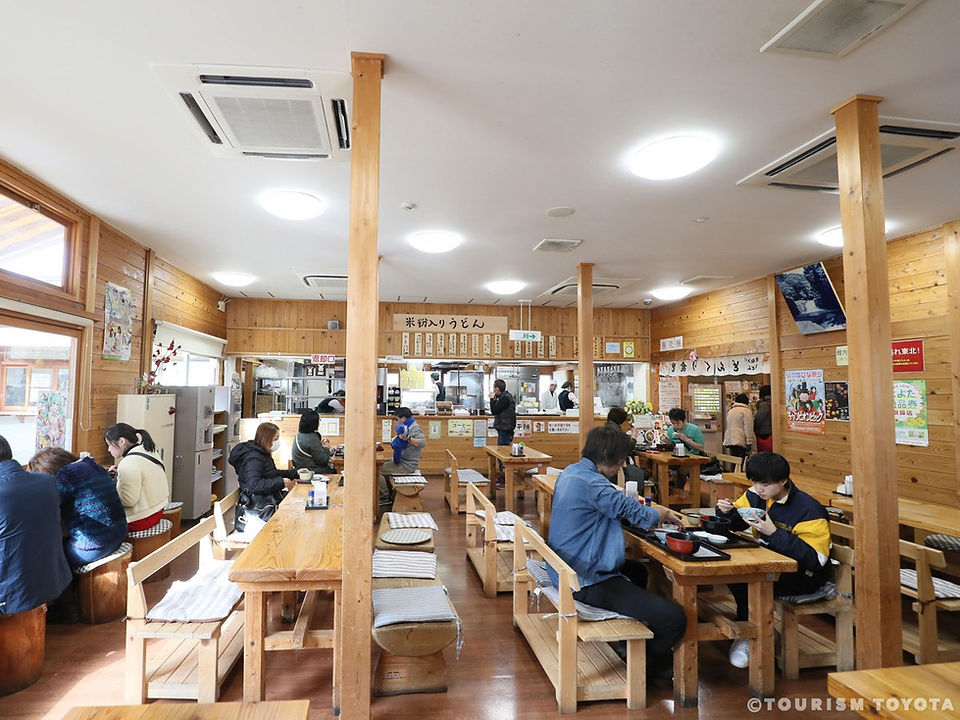


🚗 Stop Along the Way: Myoko Service Area
One of our favorite stops on the drive was Myoko Service Area (Myoko SA) on the Joshinetsu Expressway.
By the time we arrived, we were ready for a proper break. Myoko SA turned out to be a great place to stretch our legs, grab a coffee, and enjoy the mountain views.
For a highway service area, the scenery was honestly better than expected. The fresh air and open mountain landscape made it feel like we were already getting closer to the Japanese Alps.
☕ Quick Coffee Break Before the Mountains
We picked up some coffee, grabbed a few snacks, and spent a bit of time walking around before continuing the drive.
Like many service areas in Japan, Myoko SA was clean, easy to use, and had a surprisingly good selection of food and local products.
It was a simple stop, but exactly what we needed after several hours on the road.
🛒 Stocking Up Before Ogizawa
Before reaching Ogizawa, we stopped at a supermarket to prepare for the next day's hike.
We bought:
Drinking water
Sandwiches
Snacks
Simple ready-to-eat meals
Breakfast items for the next morning
If you're planning to hike the Tateyama Kurobe Alpine Route, I recommend buying supplies before arriving in the mountain area. Food options near Ogizawa and Tateyama can be limited, and prices are usually higher than in regular towns.
🌄 Arriving in Ogizawa
We arrived in Ogizawa in the late afternoon.
Compared to Tokyo, everything felt much quieter and more relaxed. The air was cooler, the scenery was more open, and the surrounding mountains made it feel like the real adventure was about to begin.
It was the perfect place to spend the night before starting our hike.
🎒 Getting Ready for the Next Morning
After parking, we organized our hiking gear, checked the weather forecast, and planned our route for the next day.
This is one of the best parts of travelling by campervan in Japan. There was no need to worry about hotel check-in times or finding accommodation after a long drive.
Everything we needed was already with us.
🛏️ Sleeping in the Roam and Roll Campervan
That night, we cooked a simple dinner, relaxed for a while, and went to bed early.
Sleeping in the campervan was surprisingly comfortable. After a full day of driving, having a proper bed ready to go made a big difference.
It also meant we could wake up early and start the next morning without wasting time on extra travel.
✅ Day 1 Summary
Overall, Day 1 was mostly about the journey, but it never felt boring.
The freedom of the road, the changing landscapes, and the excitement of heading towards the Japanese Alps made it a memorable start to the trip.
Driving Distance: Approximately 300 kmDriving Time: Around 5 hoursOvernight Stay: Ogizawa Area, Nagano
Tomorrow, we'll begin exploring one of Japan's most spectacular mountain destinations — the Tateyama Kurobe Alpine Route.
💡 Travel Tip
Arrive in Ogizawa before sunset whenever possible. This gives you plenty of time to settle in, prepare your gear, and get a good night's sleep before exploring the breathtaking Tateyama Kurobe Alpine Route the following morning.
Distance: Approximately 280–320 kmDriving Time: 4–5 hoursOvernight: Ogizawa Area (Gateway to Tateyama Kurobe Alpine Route)
✨ Tomorrow's adventure begins high in the Japanese Alps, where dramatic mountain landscapes, alpine hiking trails, and unforgettable views await.
Day 2: Tateyama Hiking Adventure & Overnight Stay in a Mountain Hut

📍 Destination: Tateyama Kurobe Alpine Route, Northern Japan Alps
After spending the night near Ogizawa, we woke up early and headed to Tateyama Station to begin our journey into the Northern Japan Alps.
Unlike a normal road trip, this is where the campervan adventure temporarily pauses. Private vehicles are not allowed beyond this point, so everyone continues using the Tateyama Kurobe Alpine Route transportation system.

🚐 Leaving the Campervan Behind
We parked the campervan and prepared our hiking gear before entering the Alpine Route.
The transportation network here is incredibly efficient, connecting different mountain areas through buses, cable cars, ropeways, and mountain transport systems.
For this trip, we decided to skip the Kurobe Dam section and focus on hiking around Tateyama itself. Our goal was simple: spend a night in the mountains and experience the Japanese Alps at a slower pace.


🌿 First Stop: Midagahara
Our first destination was Midagahara, and it immediately exceeded expectations.
The landscape here feels completely different from the rest of Japan. Wide alpine wetlands, wooden boardwalks, and mountain views stretch in every direction.
The trails are easy and well maintained, making this area perfect for casual walkers and hikers alike.
What stood out most was the atmosphere. Compared to Tokyo, everything felt incredibly quiet. The only sounds were the wind, birds, and distant hikers passing by.
It was the perfect introduction to the Northern Japan Alps.
⛰️ Reaching Murodo

After exploring Midagahara, we continued higher into the mountains until reaching Murodo. At approximately 2,450 meters above sea level, Murodo is the highest point accessible by public transportation along the Tateyama Kurobe Alpine Route.
Unlike what I expected, Murodo is surprisingly well equipped.
You'll find:
Restaurants and cafés
Visitor centers
Souvenir shops
Restrooms
Hiking information facilities
For many visitors, this is the main destination before returning back down the mountain.
📸 Mikuriga-ike Pond

One of the most popular attractions around Murodo is Mikuriga-ike Pond.
This beautiful alpine lake sits beneath the surrounding mountain peaks and is one of the most photographed locations in Tateyama.
On calm days, the mountains reflect perfectly on the water's surface, creating one of the most iconic views in the Japanese Alps.
Most tourists stop here, take photos, enjoy a short walk, and then head back.
For us, however, the real adventure was just beginning.
🥾 Hiking to Raichosawa Camping Ground
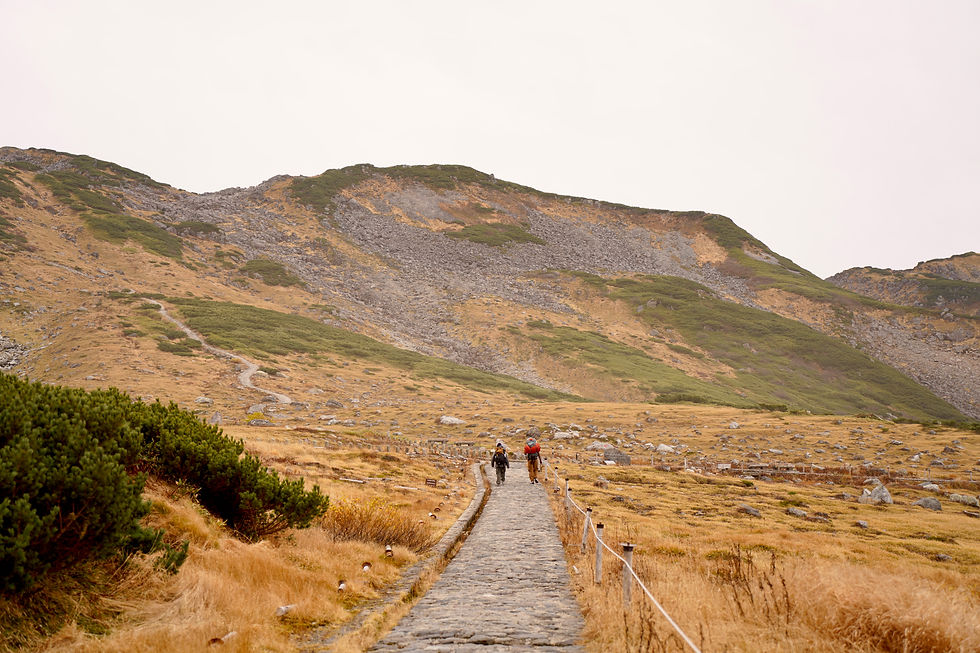
After lunch and a short rest, we shouldered our backpacks and headed towards Raichosawa Camping Ground. The hike isn't technically difficult, but carrying camping gear at altitude definitely adds some challenge.
As we descended into the valley, something interesting happened.
The crowds gradually disappeared. Within a short time, we felt completely removed from the busy tourist areas around Murodo.
Suddenly, it was just mountains, open landscapes, and a handful of hikers sharing the same trail.
📍 Mount Tateyama Area


Spectacular views across the Northern Alps
Incredible sunrise and sunset scenery
Every turn along the trail reveals a new breathtaking perspective of Japan's mountain wilderness.
Fresh Mountain Air & Peaceful Nature
One of the greatest rewards of hiking in Tateyama is the sense of tranquility.
Far from the busy streets of Tokyo, you'll enjoy:
Silence interrupted only by the wind and wildlife
Clean alpine air
Open skies and endless horizons
A deep connection with nature
It's the perfect place to slow down and appreciate Japan's natural beauty.


🛏️ Overnight Stay in a Traditional Mountain Hut (山小屋)
To fully experience life in the Japanese Alps, spend the night in a mountain hut (Yamagoya).
These mountain lodges provide hikers with a comfortable place to rest while surrounded by spectacular alpine scenery.
What to Expect
Shared dormitory-style accommodation
Simple but hearty Japanese meals
Warm hospitality
Basic facilities
Incredible mountain views
Staying overnight allows you to experience the mountains after the day visitors have left, creating a much more peaceful and authentic atmosphere.
🌅 Why Stay Overnight?
Many hikers consider an overnight stay the highlight of their Tateyama adventure because it offers:
Stunning sunset views over the Alps
A chance to experience mountain life
Beautiful star-filled skies on clear nights
Early access to hiking trails the next morning
Unforgettable sunrise views from high elevations
The mountain environment feels completely different in the quiet evening and early morning hours.
💡 Important Tips
📅 Book Accommodation Early
Mountain huts are extremely popular, especially during:
Summer hiking season
Autumn foliage season
Long weekends and holidays
Advance reservations are strongly recommended.
🧥 Bring Warm Clothing
Even during summer:
Temperatures can drop significantly at night
Wind chill can make conditions feel much colder
Weather changes quickly in the mountains
Recommended items include:
Fleece jacket
Lightweight down jacket
Waterproof shell
Warm socks
🎒 Pack Light but Smart
Essential items include:
Water bottle
Snacks and energy food
Rain gear
Headlamp
Portable charger
Camera
Personal medications
A lighter backpack makes the hiking experience much more enjoyable.
🚮 Respect the Mountain Environment
Help preserve Tateyama's natural beauty by:
Staying on designated trails
Carrying out all trash
Respecting wildlife
Following mountain hut guidelines
Japan's alpine regions are carefully protected and deserve responsible travel.
Activity: Tateyama Kurobe Alpine Route Exploration & HikingOvernight: Mountain Hut (Yamagoya)Elevation: Approximately 2,400–3,000 m depending on routeHighlight: Snow walls, alpine hiking, mountain hut experience, Northern Japan Alps scenery
✨ Tonight you'll fall asleep surrounded by the majestic peaks of the Japanese Alps, ready for another unforgettable day of adventure tomorrow.
Day 3 – Hiking to Mount Oyama and Spotting Tateyama's Famous Raicho

After spending a cold but peaceful night at Raichosawa Camping Ground, we woke up early and packed our gear before sunrise.
The mountain air was fresh, the campsite was quiet, and the surrounding peaks were slowly lighting up as the sun rose over the Northern Japan Alps. This was the day we had been looking forward to the most — climbing to the summit of Mount Oyama, one of the main peaks of Tateyama.
🐦 A Lucky Encounter with the Famous Raicho

Not long after leaving the campsite, we got incredibly lucky.
While hiking along the trail, we spotted a Raicho (Rock Ptarmigan), the bird most closely associated with Tateyama and one of the region's most famous wildlife species.
The Raicho is considered a symbol of the Japanese Alps and is rarely seen outside high mountain environments. Many hikers spend entire trips hoping to see one but never do.
Seeing one in the wild felt special.
The bird didn't seem particularly bothered by hikers and calmly moved around the rocky terrain while we watched from a distance. It was one of those unexpected moments that instantly becomes a highlight of the trip.
For me, spotting a wild Raicho was almost as memorable as reaching the summit itself.
🥾 The Climb to Mount Oyama


After the excitement of seeing the Raicho, we continued our ascent towards Mount Oyama. The hike from the camping area to the summit took us around two hours, and while the distance isn't particularly long, the trail becomes noticeably steeper as you gain elevation.
This wasn't the relaxed walking we experienced around Midagahara.
The higher we climbed, the rougher the terrain became. Loose rocks, uneven footing, and steep sections required much more concentration.
There were several points where we had to stop briefly to catch our breath and enjoy the incredible views behind us. As the altitude increased, the scenery became even more dramatic. Looking back, we could see the vast alpine valleys below and the surrounding peaks stretching across the horizon. The higher we climbed, the smaller everything below seemed.
⛩️ Reaching the Summit Shrine

Eventually, we reached the summit area of Mount Oyama, where the famous mountain shrine is located.
Standing at the top felt incredibly rewarding after the steep climb.
The views were spectacular in every direction, with endless mountain ridges extending across the Northern Japan Alps.
One thing that surprised me was how cold it felt at the summit.
Even though the weather had seemed comfortable lower down, the wind near the top was strong and the temperature felt significantly lower.

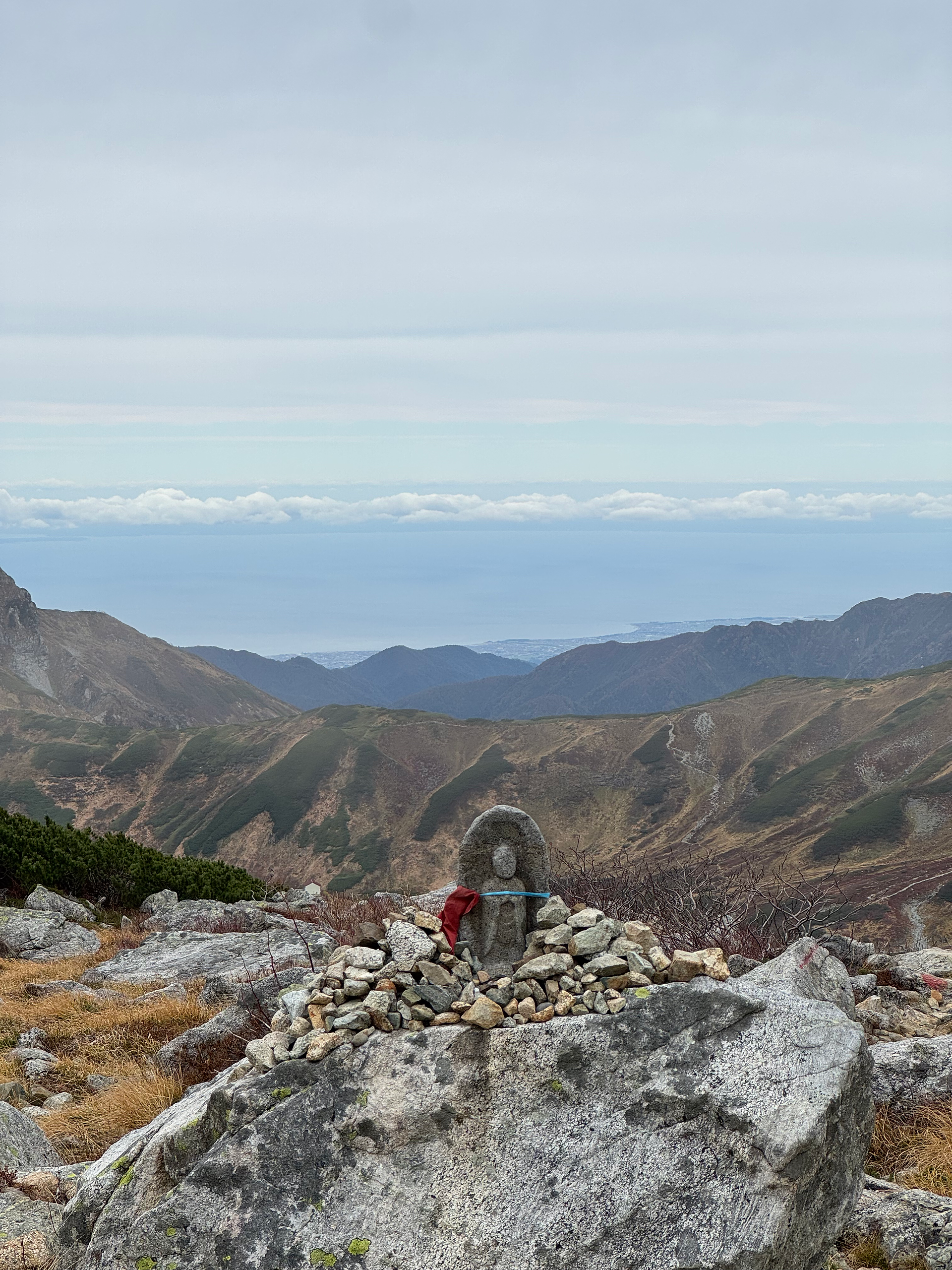

If you're planning this hike, I would strongly recommend bringing:
Gloves
A windproof jacket
Extra warm layers
Even during summer, conditions on the summit can be much colder than expected.
After spending some time enjoying the views, taking photos, and visiting the shrine, we began our descent back towards Murodo.
🚡 Back to the Campervan
After completing the hike, we retraced our route through the Alpine Route transportation system and eventually returned to our campervan.
Honestly, after carrying a backpack and spending the day hiking in the mountains, stepping back into the campervan felt amazing.
A hot drink, comfortable seat, and not having to rush to a hotel check-in is one of the biggest advantages of this style of travel.
🚐 Overnight Stop in Tateyama City
Instead of driving far, we decided to stay near the trailhead for the following day's adventure.
We parked at a free parking area:📍 https://maps.app.goo.gl/F9r8JYGASbbWD1hv7
The reason we chose this location was simple:
✅ Free parking
✅ Public restroom nearby
✅ Close to the next day's hiking route
✅ Quiet atmosphere
The area itself was surprisingly pleasant. There were a few restaurants and local businesses nearby, but one thing worth noting is that most places close quite early.
By the time we arrived, almost every restaurant had already shut for the evening, so if you're planning to eat out, it's best not to arrive too late.
Fortunately, we still had food supplies in the campervan, which saved us from having to search for dinner.
🌅 A Quiet Evening After a Big Hiking Day
After three days of travelling, driving, and hiking, it was nice to slow things down.
The parking area was peaceful, with very little traffic after dark. We took a short walk around the area, enjoyed the mountain views, and spent the evening relaxing.
Compared to the excitement of the summit earlier in the day, the quiet atmosphere felt like the perfect way to end it.
Looking back, Day 3 had everything I enjoy about outdoor travel in Japan:
Incredible mountain scenery
Challenging hiking trails
Wildlife encounters
A successful summit climb
Another comfortable night in the campervan
And seeing the famous Raicho in its natural habitat made the day even more memorable.
Day 3 Highlights
🐦 Spotting a wild Raicho (Rock Ptarmigan)
⛰️ Summit climb to Mount Oyama
⛩️ Visiting the mountain shrine
🥾 Around 2 hours of uphill hiking
🚐 Overnight campervan stay near Tateyama trailhead
🌅 Peaceful mountain evening after the hike
Overnight: Tateyama City Parking Area
Main Activity: Mount Oyama Summit Hike
Region: Tateyama, Toyama Prefecture
Day 4 – Trail Running, Ancient Temples, and a Peaceful Night Under the Stars

After several days in the mountains, we decided to start the morning with a short trail run near our overnight parking spot.
🏃 Morning Trail Run in Kamiichi


The trail was surrounded by beautiful forest and felt incredibly untouched. Fresh mountain air, flowing streams, and almost no one else on the trail made it a great way to start the day.
One thing worth mentioning is that the route can be a little confusing in some sections. A few trail markers and signs were damaged or difficult to spot, so I would recommend keeping Google Maps or an offline hiking map handy.
Even though it wasn't a long run, it gave us a chance to experience another side of Toyama's mountains away from the more famous tourist areas.
⛩️ Visiting Oiwasan Nisseki-ji Temple

After coming down from the trail, we visited Oiwasan Nisseki-ji Temple, a historic temple located nearby.
This temple has a history of more than 1,300 years and is said to have been founded in 725 AD by the famous Buddhist monk Gyoki.
The atmosphere here felt completely different from the busy tourist temples found in larger cities. Everything was quiet, peaceful, and deeply connected to the surrounding mountains.
Locals have long known the temple as "Oiwa no Ofudosan", and it remains an important spiritual site in the region today.
💦 Waterfalls, Meditation, and Mountain Energy

One of the most unique things about Nisseki-ji Temple is its connection to water.
The area is blessed with natural spring water flowing from the Northern Japan Alps. As snow melts high in the mountains and travels underground, it eventually emerges around Kamiichi, creating some of the region's most famous natural water sources.
The temple grounds feature several waterfalls that are used for Takigyo, a traditional form of waterfall meditation and spiritual training.
What surprised me most was that people of all ages still come here regularly to practice beneath the waterfalls.
Walking through the temple grounds, you can immediately understand why this area has long been considered a place of healing and spiritual retreat.
🗿 Japan's Largest Fudo Myoo Rock Carving

Inside the temple complex is one of its most famous treasures.
Carved directly into the rock face is a massive image of Fudo Myoo, the Buddhist deity known as the Immovable Wisdom King.
Standing approximately 6 meters high and 10 meters wide, it is recognized as an Important National Cultural Property and is considered one of Japan's most impressive rock-carved Buddhist sculptures.
Even if you're not particularly interested in temples, it's hard not to be impressed by its size and craftsmanship.
🍜 Hidden Local Food Near the Temple

After exploring the temple, we stopped for lunch at:
📍 Ryokan Oiwakan (旅館 大岩館)
This traditional ryokan also operates a restaurant serving local mountain cuisine.
Honestly, this ended up being one of the best meals of the trip.
Many of the vegetables used in the dishes are harvested from the surrounding mountains—the same area we had been running through earlier that morning.


A few highlights I'd definitely recommend:
Smoked duck meat
Fresh handmade soba noodles
Seasonal mountain vegetables
Traditional local dishes
The smoked duck was incredibly tender, and the soba had that fresh texture that's difficult to find outside rural Japan.
If you're visiting Nisseki-ji Temple, this restaurant is well worth the stop.
🚐 Final Night at Nomatazawarinkan Camping Ground

For our final night before returning to Tokyo, we drove to Nomatazawarinkan Camping Ground.
This turned out to be one of the most peaceful campsites of the entire trip.
The campsite sits beside a stream and waterfall, and the sound of flowing water is constantly present in the background.
The setting felt remote without feeling uncomfortable, and the surrounding forest created a sense of complete privacy.
🌌 A Sky Full of Stars


That evening, the weather was perfect.
Once darkness fell, the sky completely opened up.
With almost no light pollution, the stars were incredible. We ended up spending much longer outside than planned because the night sky was simply too beautiful to leave.
It was one of those rare camping moments where you forget about your phone, forget about the schedule, and just sit quietly enjoying the view.
☕ Coffee by the River

When renting the campervan, we had also rented a BBQ grill and coffee brewing set.
The next morning, we made coffee beside the stream while listening to the sound of the water flowing through the valley.
Simple moments like this are probably what I enjoy most about campervan travel in Japan.
No rush.
No crowds.
Just good coffee and great scenery.
📵 Completely Offline for One Night


One thing that surprised us about this campsite was that there was virtually no mobile phone signal.
At first, it felt a little strange.
But after a few hours, it became one of the best parts of staying there.
For one night, it genuinely felt like we had disconnected from the outside world.
No emails.
No notifications.
No distractions.
Just mountains, nature, and a quiet final evening before the long drive back to Tokyo.
✅ Day 4 Highlights
🏃 Trail running in the forests of Kamiichi
⛩️ Exploring the 1,300-year-old Oiwasan Nisseki-ji Temple
💦 Traditional waterfall meditation site
🗿 Massive Fudo Myoo rock carving
🍜 Amazing smoked duck and handmade soba at Ryokan Oiwakan
🚐 Final campervan night at Nomatazawarinkan Camping Ground
🌌 Incredible stargazing
☕ Morning coffee beside the river
📵 A rare night completely disconnected from the outside world
Overnight: Nomatazawarinkan Camping Ground
Main Activities: Trail Running, Temple Visit, Local Food & Camping
Region: Kamiichi, Toyama Prefecture
Day 5 – Slow Morning and the Drive Back to Tokyo

After several days of hiking, camping, and exploring the Japanese Alps, we decided to take it easy on our final morning.
☕ One Last Coffee in the Mountains
One of my favorite moments of the entire trip wasn't actually a hike or a mountain summit. It was simply sitting beside the stream at the campsite with a freshly brewed cup of coffee.
The campsite was still quiet, the air was cool, and all you could hear was the sound of running water and birds in the forest.
After spending the previous night completely disconnected from phone signals and notifications, it felt surprisingly refreshing.
No rush.
No schedule.
Just enjoying the final few hours before heading back to Tokyo.
🚐 The Journey Home
We slowly packed up camp, made breakfast, and eventually got the campervan moving around 10:00 AM.
From there, it was a long but comfortable drive back towards Tokyo.
As we left the mountains behind, it was hard not to look back and think about everything we had experienced over the previous five days.
From hiking through Midagahara and Murodo, spotting a wild Raicho, reaching the summit of Mount Oyama, visiting hidden temples, and camping beside rivers and waterfalls, the trip felt much longer than just five days.
That's one of the things I love most about road trips and campervan travel.
You experience so much more than simply moving between tourist attractions.
⭐ Final Thoughts on Roam and Roll Campervan Japan


Since a lot of people ask which campervan company we used, I wanted to share my honest thoughts. We rented our vehicle from Roam and Roll Campervan Japan, and overall, it was one of the best campervan rental experiences I've had.
What stood out most wasn't just the vehicle itself, but the level of support before the trip.
The owner was incredibly friendly and took the time to recommend hiking routes, overnight parking locations, campsites, and places worth visiting along our route.
That kind of local knowledge was genuinely helpful and made planning much easier.
🛏️ A Comfortable Campervan Makes a Difference

The campervan itself was modern, well maintained, and very comfortable.
One thing I particularly appreciated was the bed. A lot of campervan beds can feel like an afterthought, but this one genuinely felt more like a hotel mattress than a camping setup. After spending full days hiking in the mountains, having a comfortable place to sleep made a huge difference.
The vehicle was also fully equipped, so we didn't need to spend extra money renting camping gear separately.
💰 Is It Worth the Price?
Roam and Roll Campervan Japan isn't necessarily the cheapest campervan rental company in Japan. However, after comparing what was included and the overall quality of the experience, I felt it offered very good value for money.
For our five-day trip, the owner kindly gave us a 5% discount.
While chatting during pickup, we also learned that they offer significant discounts for longer rentals, including monthly rental plans.
For travelers planning an extended road trip around Japan, the long-term rental rates can work out to roughly 45–55% lower than standard daily pricing, which is surprisingly competitive.
🚐 Would I Rent Again?
Absolutely. If you're looking for a comfortable campervan, helpful local advice, and the freedom to explore Japan at your own pace, I'd definitely recommend giving Roam and Roll Campervan Japan a look. For anyone interested in hiking, camping, road trips, or simply seeing a different side of Japan beyond the major cities, travelling by campervan is an experience that's hard to beat.
And honestly, after this trip, we're already talking about where to go next year.
So yes...
We'll definitely be back. 🚐🇯🇵
If you’re interested, feel free to contact:
Instagram: @roamandrolljapan
Facebook: Roam & Roll Campervan Japan


Comments