How to Experience Japan's Summer in a Campervan: Festivals, Food & Seasonal Flavours (Part 2)

Updated: May 10

Japan's summer is not just a season it's a full sensory event. Ancient festivals lighting up the night sky, street food that only exists for a few precious weeks, and fruits so ripe they barely need an introduction. And there is no better way to experience all of it than from the freedom of a campervan.
In Part 1, we covered what Japan's summer looks and feels like. Now it's time for the good part: what to actually do.
This guide covers the best summer festivals within a 7-hour drive of Tokyo from Osaka in the south to Aomori in the north plus the seasonal foods and flavours worth going out of your way for.
Japan's Summer Festivals: What to Know Before You Go

With roughly 200,000 festivals a year, Japan's summer calendar is overwhelming in the best way. For campervan travellers, the advantage is real: you can follow the festivals, park nearby, and move on when you're ready. No hotel check-out times, no booking and public transportation anxiety.
How the Japanese Experience a Summer Festival
Before diving into the calendar, it helps to understand what a matsuri (festival) actually feels like from the inside because the experience goes well beyond watching a parade.
Wearing a yukata (lightweight cotton kimono)

Summer festivals are one of the main occasions when Japanese people wear a yukata. As a visitor, you're warmly welcome to join in. Yukata can be rented near most major festival areas, or purchased at department stores. Wearing one immediately changes how you experience the evening. The best part about having a campervan is that you have your moving wardrobe and changing room with you all the time.
The yatai (food stall) culture

Every festival has rows of yatai lining the approach to the shrine or parade route. This is where a huge part of the atmosphere lives the smell of yakisoba frying, the crack of kakigōri ice being shaved, the sizzle of takoyaki.
Hanabi (fireworks)

Many summer festivals end with a fireworks display, but Japan's major standalone fireworks competitions are events in themselves launching 10,000 to 20,000 fireworks in a single evening. Japanese spectators arrive hours early to claim a spot on river banks, bridges, or rooftops. Convenience stores sell picnic sets and cold drinks specifically for hanabi evenings.
Bon Odori dancing

During the Obon period in August, communal circle dances are held across Japan in parks, shrine grounds, and festival venues. The steps are simple and spectators are invited to join. Joining the circle, even clumsily, is one of the more joyful things you can do in Japan's summer.
Summer Festivals by Month
June — Quieter Roads, Bigger Atmosphere
Sanno Matsuri — Tokyo (mid-June, even-numbered years)

One of the three great festivals of Edo-era Tokyo, held at Hie Shrine in central Tokyo. The main attraction is the Sanno Grand Parade: over 500 participants in 16th-century court attire carry enormous floats through the streets for about 9 hours. Even in odd-numbered years when the full parade doesn't run, smaller ceremonies and events fill the 11-day festival period. A great first stop before heading out on the road.
Aizen Matsuri — Osaka (late June)

Often called Osaka's first major summer festival, Aizen Matsuri has been celebrated for over 1,400 years at Shōman-in Temple. It's a neighbourhood-scale event with food stalls, ornate festival floats, and a lively, local atmosphere that feels genuinely unhurried.
July — The Heart of the Season

Gion Matsuri — Kyoto (entire month of July)
Japan's most famous festival runs all month at Yasaka Shrine, with the main float processions on July 17 and July 24. On the nights before each procession, the streets of central Kyoto fill with yukata-clad crowds, lit paper lanterns, and yatai stalls. It's one of those evenings that makes you understand why people return to Japan every summer.
Kamakura Beach Fireworks — Kanagawa (July 17)

Held on Yuigahama Beach with the signature "underwater fireworks" shells that explode just beneath the ocean surface and bloom upward like flowers. Pair with a day at Kamakura's Great Buddha and the seaside Enoden railway.
Tenjin Matsuri — Osaka (July 24–25)

One of Japan's three greatest festivals. On the second day, a procession of roughly 3,000 people in traditional costume moves through the city, followed by a river procession of over 100 illuminated boats on the Okawa River. The evening closes with a large fireworks display over the water. Locals line the riverbanks in yukata from the afternoon arrive by 4pm to find a good spot.
Fuji Rock Festival — Naeba, Niigata (July 24–26)

Japan's biggest and most beloved outdoor music festival, held at Naeba Ski Resort deep in the mountains of Niigata. What makes Fuji Rock different from most festivals worldwide is the setting lush forested mountains, hot spring baths inside the venue grounds, art installations in the woods, and a famously clean, respectful crowd. The campsite at Naeba opens Thursday before the festival, making it a natural 3–4 night campervan destination.
Sumida River Fireworks — Tokyo (last Saturday of July)

One of the oldest fireworks festivals in the world (dating to 1732), launching over 20,000 fireworks from two sites along the Sumida River near Asakusa. The sky fills with colour for close to 90 minutes. Japanese spectators spread picnic sheets along the riverbanks hours in advance. Campervan parking in central Tokyo is limited; park outside the city and use the train in.
Soma Nomaoi — Fukushima (late July)

A spectacular and genuinely unusual festival: hundreds of riders in full samurai armour compete in equestrian events, wild horse chases, and ceremonial battles. It has been held for over 1,000 years in Minamisoma City and draws serious crowds.
August — Obon, Tohoku's Big Three & More
**Campervan note:** August is peak season. Campsite bookings along the Tohoku corridor fill fast. Reserve at least 3 weeks in advance if your trip coincides with Nebuta or Sendai Tanabata.
Nagaoka Grand Fireworks Niigata (August 2–3)

One of Japan's top 3 fireworks festivals. The signature "Phoenix Fireworks" a sweeping 2km burst of colour representing Japan's postwar revival is one of the most emotionally powerful displays in the country.
Sendai Tanabata Matsuri — Sendai, Miyagi (August 6–8)

The largest Tanabata festival in Japan. Sendai's shopping arcades are transformed into a tunnel of thousands of elaborate paper and bamboo decorative streamers, each handcrafted by local artisans and businesses. The festival celebrates the old legend of two stars — Vega and Altair — crossing the Milky Way to meet once a year.
Aomori Nebuta Matsuri — Aomori City (August 2–7)

The unmissable highlight of the northern route. For six evenings, enormous illuminated floats (Nebuta) depicting warriors, gods, and mythological figures parade through Aomori, accompanied by the thunder of taiko drums and costumed dancers leaping through the streets. The atmosphere is electric. The final afternoon parade ends with fireworks over Aomori Bay.
Campervan Tip: Parking at Festivals
For city festivals like Gion, Tenjin, and Nebuta, park at a *michi-no-eki* or campsite 20–40 minutes outside the city centre and use local transport to get in. For Fuji Rock and rural festivals like Soma Nomaoi, dedicated campervan parking is available but limited — check the official festival website well in advance and book early.
Japan's Summer Foods: Where to Find Them & How to Enjoy Them

Japanese summer eating follows a concept called *shun* (旬) — the idea that ingredients taste best eaten at their precise peak moment. Summer brings an abundance of festival street foods, iconic dishes, and seasonal fruits that simply don't exist at any other time of year. Here's where to find them on the road.

Every festival has rows of yatai lining the approach to shrines and parade routes.
- Yakisoba — stir-fried noodles with cabbage and a rich savoury sauce. The smell will find you before you find the stall.
- Takoyaki — crispy Osaka-style octopus dumplings, topped with bonito flakes, mayo, and sweet sauce.
- Kakigōri — finely shaved ice drenched in flavoured syrup (matcha, strawberry, condensed milk, or lemon). The best antidote to Japan's summer heat.

At the Convenience Store (Konbini)
Japan's 7-Eleven, FamilyMart, and Lawson stores stock remarkable seasonal summer items that make for excellent van meals and snacks.
- Hiyashi Chūka (cold ramen) — chilled noodles with colourful toppings in a sesame-soy sauce. Available at most konbini from June through August only.
- Kakigōri-flavoured snacks — seasonal ice and melon-flavour Kit Kats, Popsicle bars, and limited drinks that rotate monthly.
- Rehydration drinks — Pocari Sweat and Aquarius for daily hydration; OS-1 (available at pharmacies) for recovery after intense heat exposure.

Michi-no-eki are your best source of local, seasonal produce on any campervan road trip. They sell directly from nearby farms — often fresher, cheaper, and more interesting than supermarkets.
- Fresh fruit — peaches, watermelon, cherries, and melon at farm prices
- Seasonal vegetables for van cooking: corn, cucumber, tomato, bitter melon (*goya*)
- Local prepared foods — onigiri stuffed with umeboshi, regional soba, grilled corn
Seasonal Fruits: The Summer Campervan Road Trip Highlight


Cherries JUNE
Satō Nishiki from Yamagata. Small, glossy, intensely sweet-tart. Stop at roadside stalls on the northern route.
Peaches JULY–AUG
White peaches from Yamanashi and Fukushima. Soft, fragrant, almost floral. Buy by the box at Chūō Expressway michi-no-eki.
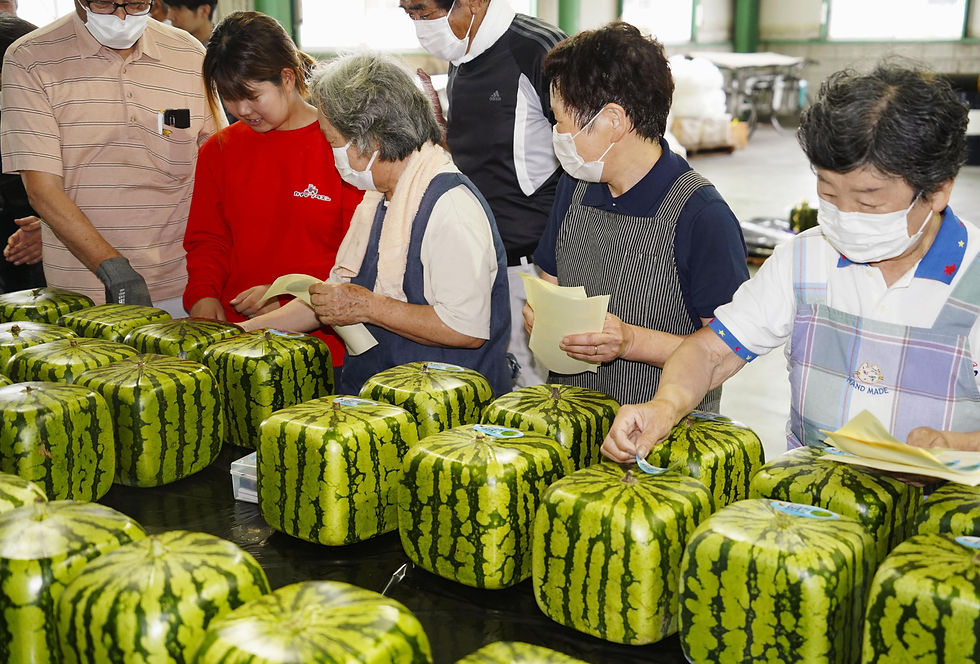
Watermelon LATE JUNE–AUG
The most iconic summer fruit. Personal-sized varieties at supermarkets are perfect for van travel.
Melon JULY–AUG
Crown Melon from Shizuoka and Yūbari King from Hokkaido. Deeply sweet. A luxury worth the stop.

Grapes JULY–AUG
Kyoho and Shine Muscat. Yamanashi and Okayama. Consider a budō-gari (grape picking) farm visit.
Nashi Pear FROM LATE AUG
Large, round, crisp Japanese pear. From Fukushima, Tochigi, and Ibaraki — all within easy range of Tokyo.
Cooking in the Van

Japan's summer heat means you won't want to run a hot stove for long. These van-friendly dishes take 10 minutes or less:
Cold Sōmen 10 MINUTES
Thin white wheat noodles, cooked and rinsed under cold water, served with a dipping sauce (mentsuyu), sliced spring onion, and grated ginger. Packets are sold at every supermarket. One of the lightest, most refreshing meals you can make on a hot day.
Edamame & Cold Beer 5 MINUTES
Boil fresh edamame in salted water for 4–5 minutes, drain, toss with extra salt, and serve cold. The default Japanese summer evening ritual — best eaten outside, watching the sun go down.
Grilled Corn (Tōmorokoshi) 15 MINUTES
Fresh corn is widely available at michi-no-eki in summer. Grill on a gas burner, brush with soy sauce and butter in the final minute. A Japanese roadside classic.
In Part 3 of this series, we cover the practical side of a Japanese summer road trip: managing the heat and humidity, dealing with insects, and understanding bear safety in the Japanese countryside.

What is Japan Like in Summer? Complete Japan Summer Travel Guide (Part 1 )
It’s the best time of year for road trips and nature travel, especially if you want to explore iconic destinations like Mount Fuji or the scenic alpine beauty of Kamikochi.


Comments